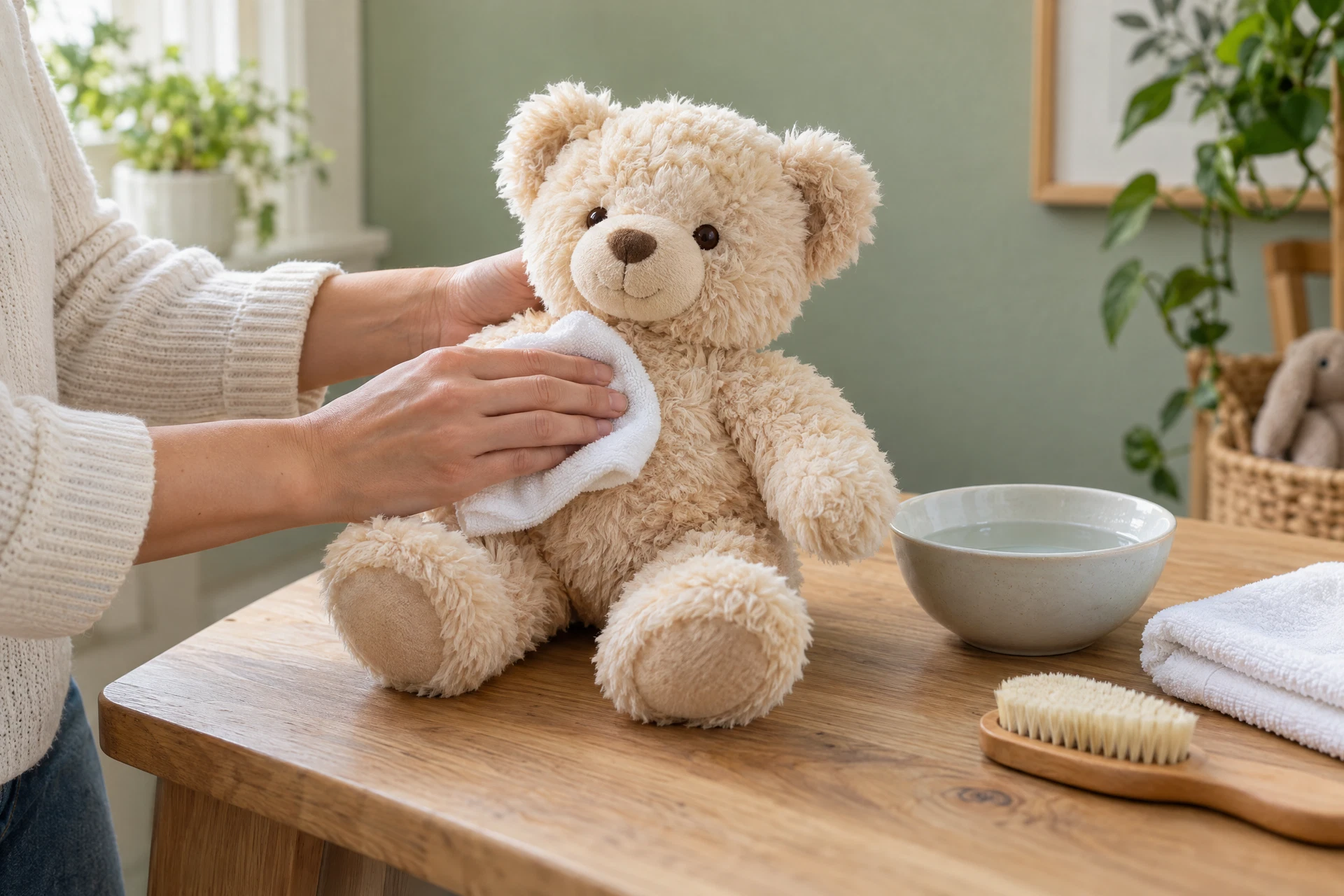
Stuffed animals pick up spills, dust and body oils over time, and many owners want a clean, soft toy without risking damage. Surface cleaning stuffed animals is a targeted approach that refreshes fabric, fur and trim without submerging the toy. That preserves sewing, glued features, and any fragile trims that could deform in a full wash. The goal is to remove visible soil and reduce odors while keeping the construction intact.
Before you begin, inspect the manufacturer's label for care instructions and feel for internal elements like paper tags, voice modules, or delicate trims. If the label explicitly forbids water or spot treatment, follow its guidance. For many other plush items, a careful, stepwise surface-clean method—using mild detergents, controlled moisture, and gentle agitation—works well. This article focuses tightly on surface cleaning stuffed animals, with practical decision criteria and examples to help you choose the right approach.
Decide When Surface Cleaning Is Appropriate
Surface cleaning stuffed animals is best for light soiling: small food spots, makeup smears, pet hair, or lingering odors that don't require a full bath. If the toy has embedded dirt, a wet stain that soaked to the seams, or heavy grime, a more thorough wash might be needed. Consider the construction: sewn eyes, glued parts, or electronic modules increase the appeal of a surface-only approach.
Checklist to decide: 1) Read the care label for explicit instructions. 2) Gently probe seams and openings for electronics or loose stuffing. 3) Assess the extent and age of stains—fresh, surface-only stains are ideal for spot treatment. If multiple deep stains or an unpleasant mildew smell persist after surface cleaning, pause and consult the label before attempting anything more aggressive.
Assemble Tools and Safe Cleaners
Gather a small soft-bristled brush (an old toothbrush or a makeup brush works), a couple of clean microfiber cloths, cotton swabs, a shallow bowl, and gloves if desired. For cleaners, choose a mild liquid detergent or a small amount of soap-free baby shampoo diluted in water. Vinegar and baking soda are sometimes useful for odors, but use them cautiously: test any acidic or abrasive agent on an inconspicuous area first.
Practical mix: dissolve one teaspoon of mild detergent in one cup of lukewarm water for general spot cleaning. For tougher greasy spots, two drops of dish soap diluted in the same volume can work, applied sparingly. Keep a spray bottle handy only if you plan to mist lightly—avoid soaking. Label and keep cleaning solutions away from children and pets.
Test a Hidden Area First
Always test your cleaning solution on a hidden patch—inside a seam, the back of an ear, or under a tail flap. Apply a dab with a cotton swab, blot and let dry. Look for color bleeding, fabric shrinkage, pile flattening, or any finish loss. If the area shows damage, abandon that cleaner and try a gentler option like plain water or an enzyme-free baby wipe.
Record what worked in a small note with the toy if you maintain a collection or care for multiple items. This small step prevents irreversible fading and protects delicate trims like embroidered noses, painted faces, or metallic threads that often react poorly to water and detergents.
A Step-by-Step Surface Cleaning Routine
Start by dry-clean methods: brush loose dirt and lint with the soft-bristled brush, then vacuum gently through a stocking on a low-suction nozzle to lift dust without snagging fur. For hair and pet fur, use a lint roller or a piece of masking tape wrapped sticky-side out to pull fibers away without wetting the surface.
For an actual spot clean, dampen a microfiber cloth or cotton swab with your diluted detergent. Blot the stain from the outside edge toward the center to prevent spreading. Avoid rubbing vigorously; instead, use light circular motions and alternate with a clean, damp cloth to lift soap residue. Work in small sections and frequently check the label and tested area for changes.
Treating Common Stains with Concrete Tactics
Food stains: Remove excess solids first, then blot with the diluted detergent solution. For dried grease, apply a small amount of dish soap solution focused on the smudge, blotting until the stain lifts. Repeat and then rinse the area lightly with a cloth dampened with plain water to remove residue.
Ink and marker: Alcohol-based products can lift many inks but can also remove dye from the plush. Use a cotton swab with minimal rubbing alcohol applied only after testing. Blot from the outside in and immediately neutralize with a damp cloth. For washable markers, a small enzyme-free stain remover on a swab may work; again, test first.
Yellowing and odors: For mild yellowing from body oils, a very light application of diluted vinegar (one tablespoon white vinegar to one cup water) can help neutralize odors; test first. For odors without visible stains, sprinkle a small amount of baking soda on dry fur, let it sit for 15–30 minutes, then brush or vacuum it off. Do not leave baking soda on delicate fibers for long periods.
Drying, Refluffing and Reshaping Safely
After spot cleaning, remove as much surface moisture as you can by blotting with a dry microfiber cloth. For thicker fur, use the soft brush to tease the pile back into shape while it is nearly dry. Avoid heat: do not use clothes dryers or direct sunlight for long periods, which can fade colors and warp elements. Air-dry at room temperature on a clean towel, turning the toy occasionally to promote even drying.
If the toy looks matted after drying, lightly steam from a distance with a garment steamer or hold over a pot of hot water (not too close) to relax the fibers—test first and avoid heat-sensitive trims. Once fluffy, brush in the direction of the nap for a consistent appearance. For toys with glued-on features, ensure they are fully dry before handling heavily to avoid reactivating adhesives.
Common Mistakes and How to Avoid Them
Mistake: soaking the toy to speed cleaning. Surface cleaning is about controlled moisture; soaking can drive stains into seams, distort shapes, and loosen glued eyes. If water is necessary, use minimal amounts and blot frequently. Mistake: skipping the hidden-area test; many colorfastness issues only reveal themselves after the whole surface has been treated.
Mistake: using harsh chemicals or bleach. These can weaken fibers and strip dyes. When in doubt, revert to the mildest option—plain water and mechanical brushing—or consult the care label. Keep tools clean between uses: a dirty brush or cloth can re-deposit grime. Small changes in pressure, solution concentration, or drying time often determine success, so work slowly and observe results as you go.
Practical Small Example: Removing a Chocolate Smear
Scenario: a chocolate smear on a plush paw. First, let any soft chocolate solidify and scrape off gently with a dull knife or the edge of a credit card. Brush away crumbs and vacuum the area lightly. Test a teaspoon of mild detergent diluted in one cup of water on a hidden paw seam.
If safe, dampen a cotton swab with the solution and blot the outer edge of the smear toward the center to avoid spreading. Work in tiny areas, switching to clean swabs as the swab picks up color. Rinse the treated spot with a cloth dampened in plain water to remove soap. Blot thoroughly and allow to air-dry, finishing by brushing the fur to restore the nap.
When to Seek Professional Help or Replacement Guidance
If a toy is an heirloom, has complex mechanical or electronic parts, shows mold growth, or contains rare fabrics, consider professional conservation or toy repair services. Professionals can disassemble pieces safely or use specialized cleaners that are not practical for home use. Also check the label before attempting any step that might void a warranty or care recommendation.
For purchases or gifts, ask sellers about fabric content and care practices in advance. Retailers often provide care advice on product pages; you can visit the care information page for more general tips or contact the shop directly through their contact page for specific questions. If you buy in bulk for resale, consult wholesale terms before assuming any cleaning approach will be appropriate.
Explore the details before choosing
Take a closer look at Bears, review our plush and clothing care guidance, or ask about specifications and availability before making an order request.